Notes From Prague
Getting out of America to a country with a thousand-year consciousness can be a balm. I just spent ten days in Prague and offer some notes about being an American abroad in 2026.

This newsletter does not benefit from the sharp eye of a copy editor. Please forgive typos and other errors.
I spent the past ten days in Prague (with an overnighter to the spa town of Karlovy Vary) for my wife Sally’s birthday. I was a little anxious, for the first time in my life, about being an American abroad, and also getting back into the country.
It will be a while before Americans are actually targeted overseas, though, thankfully. Europeans understand that sometimes you end up with a bad leader and it doesn’t mean every citizen of the country is complicit. But. I have traveled to Europe a number of times and visited a number of countries. When people have asked where I’m from in the past, they generally brighten at least a tiny bit when they hear “America.” They relate to some part of our enormous cultural impact (TV and movies, music, fast food, consumer goods, etc) or have friend or relative connections to the US. I didn’t see any of that brightness in reactions this trip.
What’s it’s like now? We should never extrapolate too much from one person’s experience (even our own), but I have an illustrative story. We went to a famous brewery in town, 527-year-old U Fleků. The brewery packs people in cheek to jowl there, so you have a chance to interact with neighbors. A group of what turned out to be Slovakians were chatting amiably when the question came up: where are you from? We had barely completed the word “America” before they shouted back “Greenland!” as they dissolved into laughter.
It wasn’t a mean response—they soon said, “Hey, we have an asshole, too.” (They do; Slovak PM Robert Fico is a Trumpian figure.) It was just an organic, reflexive response—they managed to condense all the complexity of their current appraisal into a single word. For a European, I would expect that nothing more captures the combination of absurdity, unreliability, stupidity, and Trumpiness than our president’s recent escapades at Davos. As shorthands go, “Greenland” is pretty good.
It’s restorative to visit a country with a history as complex and fascinating as Bohemia’s. It’s one of those places where history is a living part of the experience. For Americans, that history is the bit that affected us: the assassination of Franz Ferdinand, at the time living outside Prague to start the first World War, independence in 1918, the Nazi invasion and occupation, the death camps, the communist era, Prague Spring, and independence again. That series of events, compressed into three-quarters of century, is more eventful than any place in Europe. But to a Czech, it’s just last week.
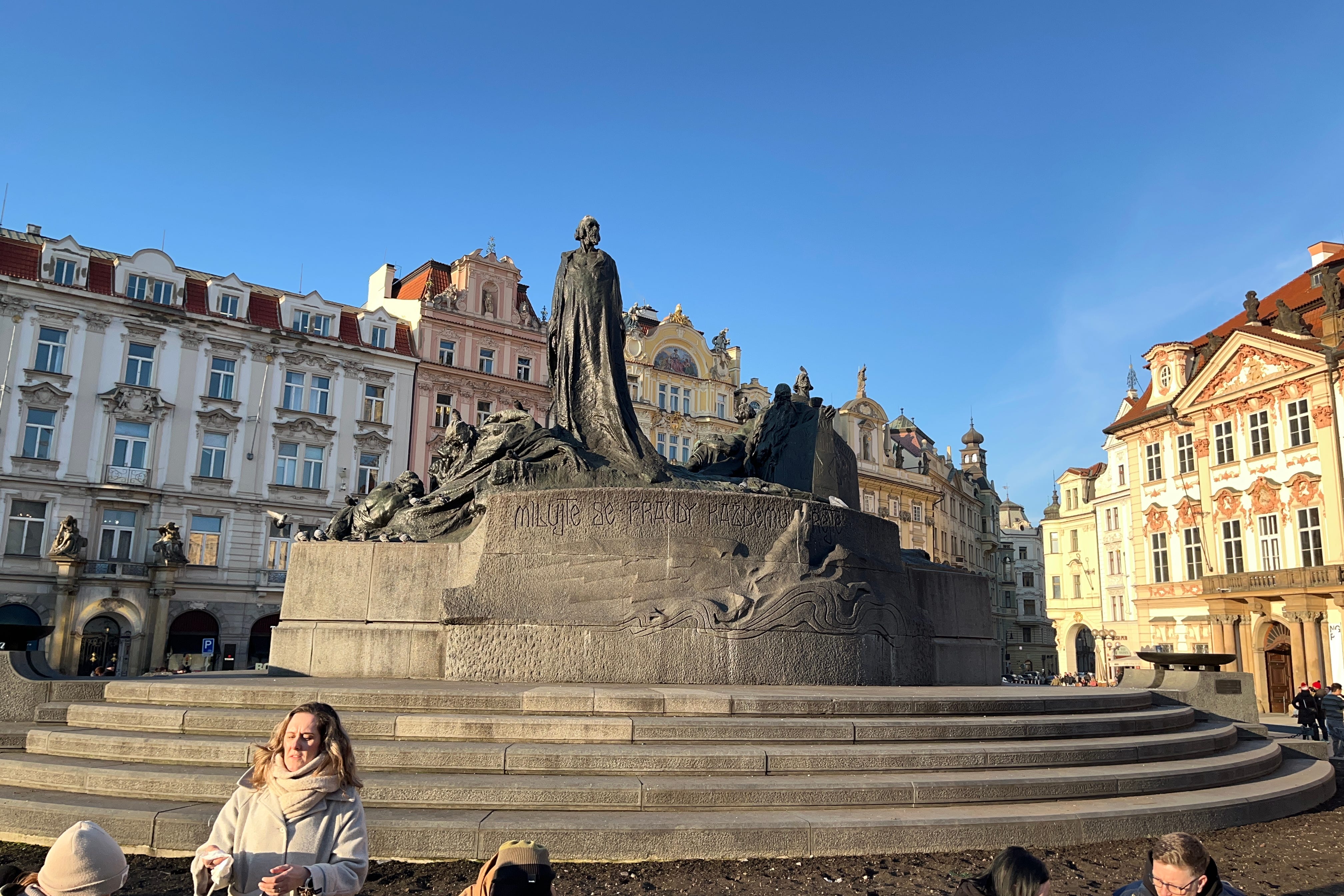
Everywhere you go in Bohemia you see icons of the 14th and 15th centuries. Charles IV (or depending who’s counting, Charles I), the Prague-born king who would become Holy Roman Emperor. Jan Hus, the pre-Luther Protestant reformer whose movement would turn the country away from Catholicism for a time. John of Nepomuk, the Catholic priest who became a popular Saint after his death (he was thrown into the Vltava in Prague from the Charles Bridge, named for that same king). Or go back further, to the Přemyslid dynasty, which created the modern state of Bohemia beginning in the 9th century, the residue of which clings just as firmly in the Czech memory.
History isn’t a just collection of events that happened in the past; it forms the consciousness of the people who remember. Historical figures populate that consciousness with as much reality as aunts and grandfathers. The stories parents tell their children become part of their own experience, as real as if they had lived them themselves. To visit Czechia is to step into a thousand-year consciousness filled with glory and tragedy, rule and misrule; filled with characters as rich and complex as any we know personally. It isn’t a history packaged to deliver a single, congratulatory message to the Czechs. Quite the opposite: it reminds them that anything is possible, but nothing is permanent.
The American consciousness, by contrast, is almost willfully ahistorical. We pick and choose, selecting the heroism of WWII (without, of course, having any real knowledge of the details), discarding the shame of Jim Crow. Moon landings yes, Native American genocide no. Jefferson the founding father yes, Jefferson the slave-owner no. In the past twenty years, American consciousness has become contested, as people who hold a less congratulatory memory of history try to expand the experience of Americanness. The Stephen Millers of the world have built a political movement to reject it. America’s ahistoricity places on us the burden of living mostly in the present, without perspective. It makes us edgy and reactive, not patient and reflective.
Trump wants to make American great again, and in his puny imagination, that means casting back to some combination of 1950s domestic bliss and 1980s Wall Street free-for-all, everything out stripped out. His consciousness (and the GOP’s) is so anemic that it doesn’t include any of the traumas of history. It doesn’t even recall most of that history, just a few random memories from 1950s sitcoms and freewheeling lives of those who will never be made to answer for things like visiting a pedophile’s island or using the N-word.
But equally, it means that those of us who are horrified by the coup have no way to ground it in a historical experience. We may understand intellectually that these kinds of catastrophes happen, but it’s not part of our consciousness the way it is in a Czech’s mind. The Czech Republic, as a country, is just 34 years old. It’s the tip of a vast iceberg of consciousness that extends back through the centuries. We have nothing like that to anchor us in some context that would help navigate 2026. For Americans, the Trump era is unprecedented. We search for the wisdom of experience to tell us what to do—the burned finger that taught us to fear fire—but it’s all impenetrable darkness. When your 250-year-old democracy begins to crumble, what muscle tells you which way to jump? We stand in the darkness trying to see some faint shape that will help us get our bearings, but it’s just not there. Our muscles do not twitch.
Sally and I felt physically energized by the trip and I felt emotionally recharged. I was able to pour a tiny bit of Czech consciousness into my mindstream, give myself an ounce of perspective. It’s why I love travel. You don’t have to be Czech to experience the way Czechs think. You just have to be open and aware.
We hadn’t been on American soil an hour before we were reintroduced to the American consciousness, or one fragment of it. At passport control we were met by a young White man who spoke in that clipped language of the police state, lawful and expressionless. It is flat because to express emotion and humanity would expose one to empathy, which is counterproductive in a police state. We tried to engage him, coax him into a human exchange. Sally told him we celebrated her birthday in Prague. He stood stony-faced. We continued to chat him up, and his brow furrowed. He didn’t like this line of conversation. He ended it fairly quickly with an answer to Sally’s inquiry about his own travel experience. Had he been to Prague?
“No,” he said in a tone of voice meant to curtail further conversation. “I been to Europe. I did not like it.”
I suppose he didn’t. People who want to make America great again do not want to encounter new ideas. They want their consciousness to reside in a very particular place in which no signs are in Spanish, women are school teachers and not your boss, and where Thomas Jefferson was an unsullied moral exemplar. Going to Europe must be unsettling for people who are struggling with all their emotional strength to keep new ideas at bay. If you are trying to create the consciousness of a country that never existed and knit it together with fragments of bigotry, myth, and nostalgia, you must feel constantly besieged. So much of the world antagonizes and threatens you. New ideas float around like deadly gases. Breathe them in and you may perish.
This is the fight we are currently having. People who want to live in different consciousnesses. Unfortunately, Americans have not cultivated a sense of history that would inform our shared experiences.
If you’re in the MAGA camp, I can’t recommend Prague. It would be deeply unsettling. If you’re an Americans like Sally and me, though, definitely consider it as a tonic to the darkness of this historical moment. You might find balance drinking in the history of the place. Oh, and the beer’s not bad, either.
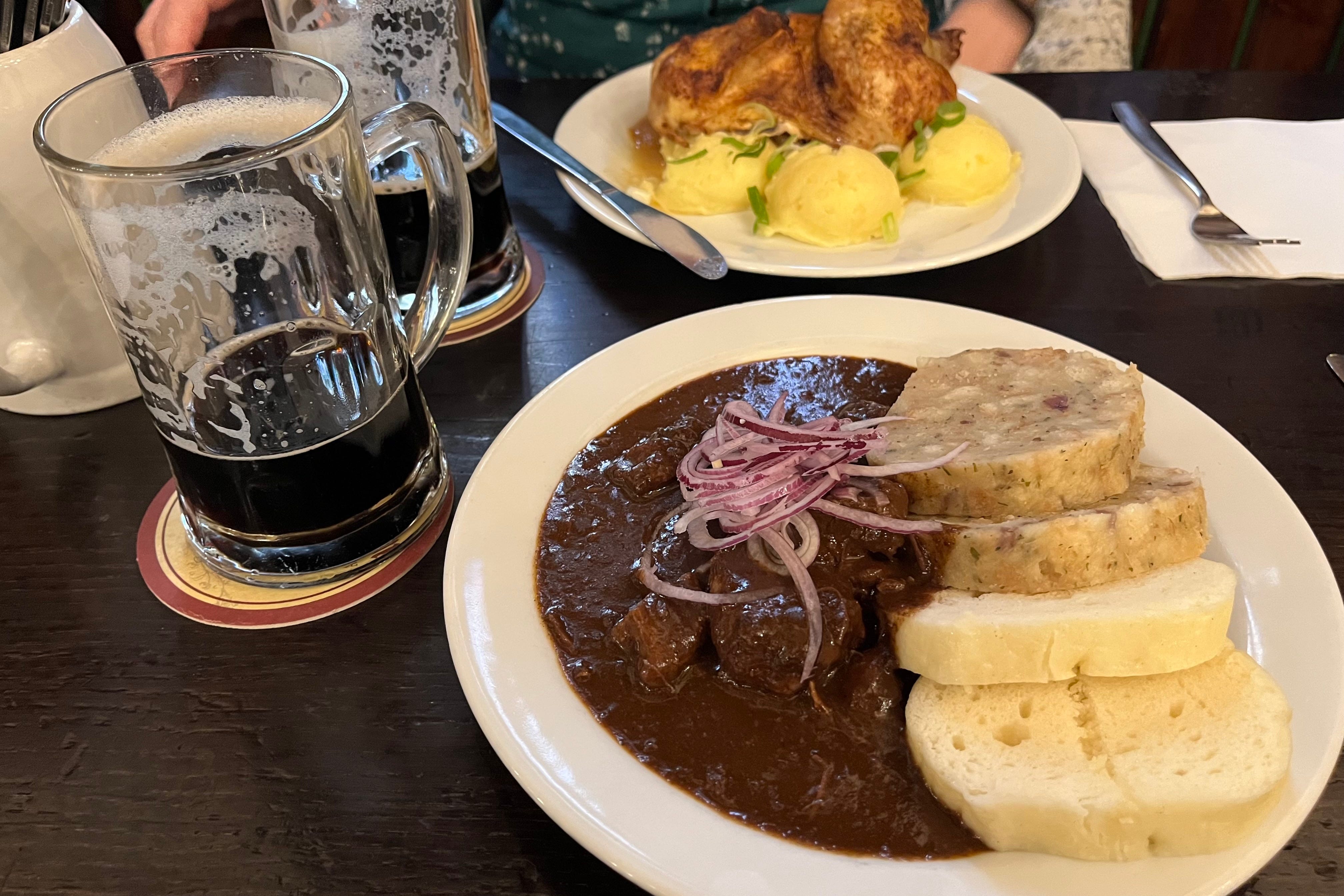
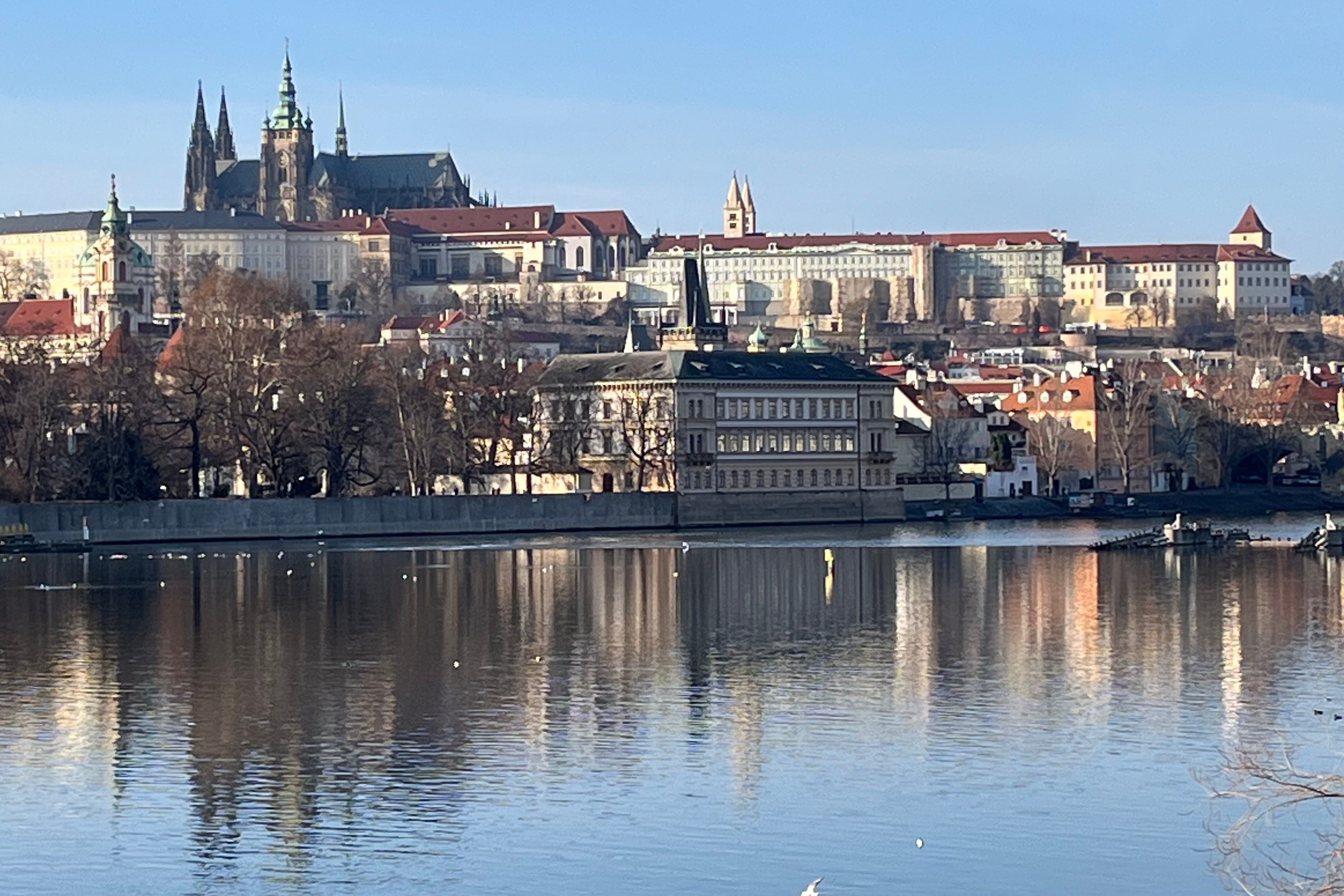
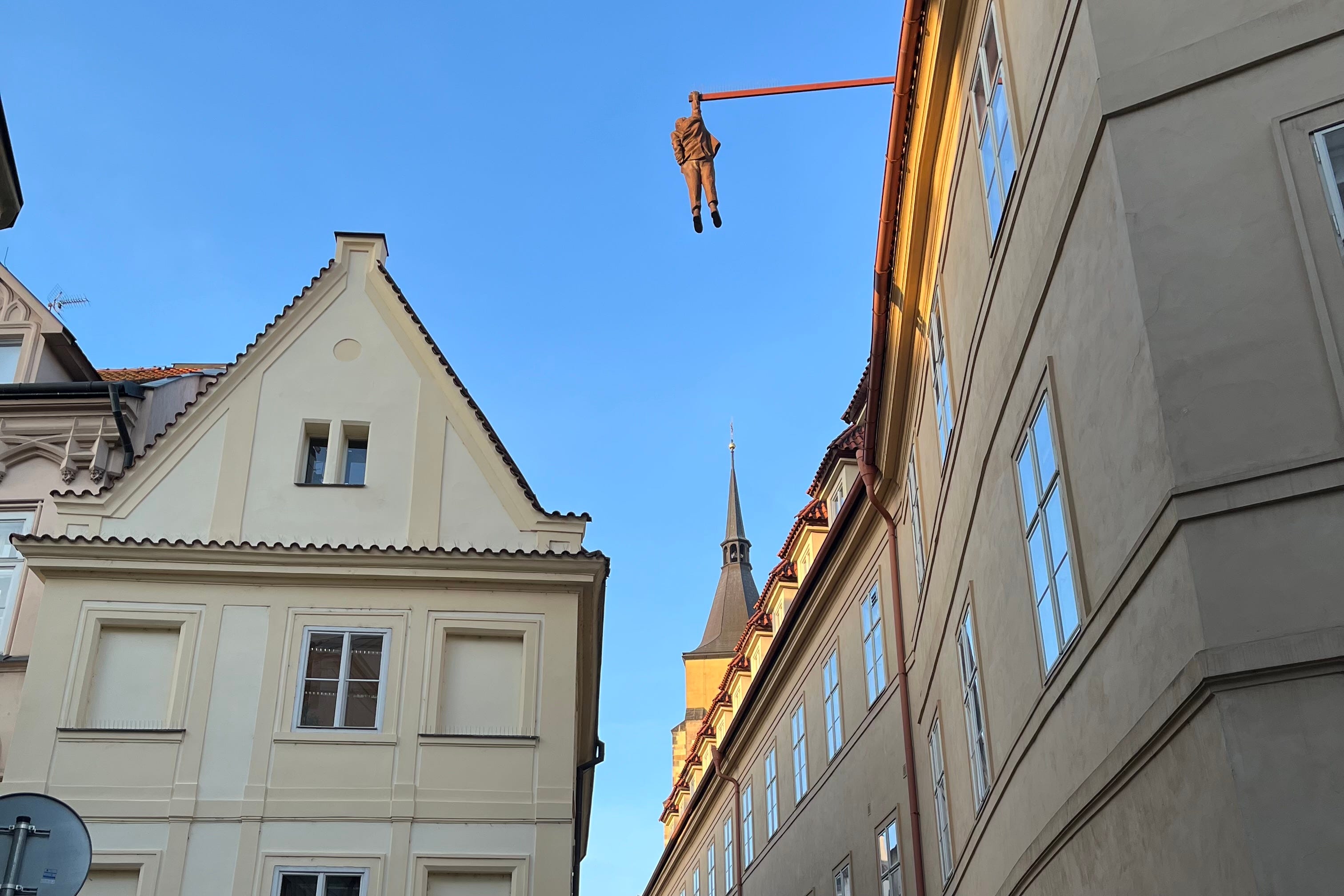
Photos from top: St. Vitus Cathedral and the castle across the Vltava River; statue of Jan Hus in Old Town Square; “Man Hanging Out,” a sculpture of Freud by celebrated Czech artist David Cerny; our meal at U Fleků a few minutes before the exchange with the Slovaks.
Greenland! 🫵🤪
Nice writing, my friend. I hope to live to see the day when we look back at this King Trumpty-Dumpty time as a wretched chapter that we survived and grew from.